Bryan Joiner

Why then I

Month: June, 2010

LeBron, the Knicks, the Nets, and the Red Pill

The only thing Chris needs more than a glass of water is a working Internet connection. He doesn’t even need a minute to think this over. Say the word, chart the King’s path for New Jersey, and he’s ready to make the switch. After years of frustration in the best of times and something beyond despair in the worst of them, he’s looking at the Knicks and he feels nothing at all. The Church of Anthony Mason has been destroyed. For the first time, he sees this:
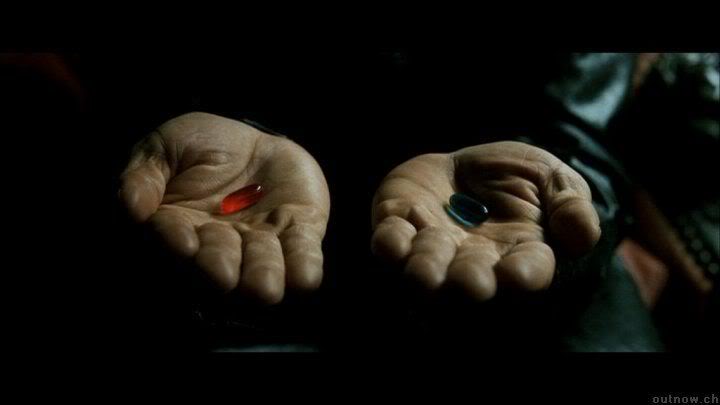
Starting tomorrow, Chris will be clicking between two websites: Twitter, which is sure to break news of LeBron James’ eventual destination faster than any other site, and the New Jersey Nets’ official website. The season tickets page, to be exact. If LeBron jumps, so will he, and that will be the end of it.

It’s hard for me to say how much Chris loved the Knicks growing up; I didn’t know him until eight years ago, when the team was already corkscrewing to the bottom of a terrible conference. The Nets were ascendant then, but that made no difference to him. The Knicks were bad, but to him and many others, still: StarksMasonEwingEwingEwing, and FUCK Charles Smith, but not as much as Michael Jordan, no player as much as Michael Jordan, not then or not ever, but Jimmy Dolan on the other hand…

He watched and waited and watched and waited, and good God, he watched. He watched the Knicks on television, compulsively. He was an addict in search of that first, glorious high, creepingly aware that it was never coming back but digging in his heels—and his butt into his couch—anyway. The definition of addiction, and the definition of insanity. Still, they were his Knicks, and nothing could change that…

Until 2004, Chris was a Yankees fan. The A-Rod trade turned him off to the team altogether, and he swiftly made the switch to the Mets. To this day, I’ve never heard any echoes of his joy at 1996 or subsequent titles. Maybe he keeps them to himself, but his love for the Yankees seems dead, a small fire snuffed out by a Category 5 hurricane.

For the Knicks, Hurricane Isiah finally started pushing people to the brink. Not Chris. He kept watching. StarksMasonEwingEwingEwing. FUCK Charles… eh, I guess he’s no Isiah. And FUCK Michael… eh, why bother? Chris didn’t let go of his grip completely, he just loosened it, but the storm kept coming.

Now the Nets are definitely coming to Brooklyn, where Chris grew up, and the Knicks, having ostensibly planned for this offseason for three years, look as clueless as they did when they started. Not only that, Chris is convinced that LeBron is signing with the Nets. He is convinced that LeBron’s mind has long been made up to come to New York, but that he, like Chris, sees a team that died 10 years ago. The fire still burned for Chris, surviving every Category 5 hurricane James Dolan threw at him, but why would it for LeBron?

There is, technically, no Category 6 hurricane. That’s what James would be. He’s already a prototype of something we haven’t seen before. Category 6. Category number 6. For Chris, he’s the hope to extinguish the smoldering wreckage of what was and will always be his favorite era in any sport, ever. Starks, the little engine that did. Mason, the man on whom he has modeled a not-insignificant part of his life (Chris’ love for Mase is pathological, admirable, scary). Ewing, the original spark of hope. Ewing, the key to it all. Ewing, the symbol of all that could have been, a monument to the past.

If the storm comes, it’ll fill thousands of glasses of water. The blue pills keep fans looking backward. The red pill pushes them forward—”the only direction”—and that’s why Chris has chosen it. But he’s no longer looking to the sky for his water to wash it down. He’s already taken it and, that’s why for the first time in a decade, he’s ready to enjoy whatever comes next.

•••

Dwyane Wade and LeBron James

It’s good to be Dwyane Wade.

Ten years ago, in the Major League Baseball offseason to end all offseasons, there was a bumper crop of free agents which included three huge names—Alex Rodriguez, Manny Ramirez and Mike Mussina—and a bunch of smaller ones who followed them like fish follow whales, gobbling up the extra money of the boom days. If the 1998 home run chase “saved” baseball, the 2000 free agent grab was the MLB Network precursor to baseball as a reality show.

That winter, my colleagues at the college newspaper and I refreshed ESPN.com’s free agent tracker once every, oh, three minutes—and only that long because it took about two and a half minutes to load. Every player on the market was listed, and the logos of the interested teams would be applied or removed next to their names based on the news of the day. Rodriguez’s page was the most volatile, reflecting his position as the most singularly heralded free agent of all time: a player with the skills of no other, in the prime of his career, offering his services to the highest bidder. Ramirez’s free agency period was not without its fanfare, but it was a fraction of that of Rodriguez, who, with agent Scott Boras, milked A-Rod’s numbers for everything they were worth, most famously creating a 73-page booklet (link at bottom of page) stating his earning potential based on his already legendary position in the history of the game. The opening page blares: “Alex Rodriguez is the best shortstop in Major League Baseball history at age 24.”

This year’s NBA free agent class has a remarkably similar constitution. For Mike Mussina we have Chris Bosh, the reliably very, very good-but-not-great star whose star gets brighter by association with the others; for Ramirez, already a Hall of Fame-caliber player, we have the legend-in-the-making Dwyane Wade; and for Rodriguez we have LeBron James, the once-in-a-generation supernova of a player, peddling his wares at the peak of their power.

To the degree the Rodriguez and James situations are different, there are two practical considerations that would suggest James has a better chance of choosing to stay in Cleveland than A-Rod had of staying in Seattle; one, he is from the area, and two, the Cavaliers can offer him more money than any other team. That we don’t know, on the eve of the official free agency period, if James is staying or going indicates that this isn’t simply a financial decision. I don’t know what’s in the man’s heart, and I won’t guess, but I’ve tended to agree with the excellent writing of Cleveland Frowns on the subject. Frowns says that all things being equal, it’s in LeBron’s best interests to stay—while acknowledging that none of us know if all things are equal in LeBron’s world. Only LeBron knows that.

All we know is that LeBron courts attention the same way Rodriguez did, which is to say, insatiably… and we know that Wade hasn’t. I’m sure he’s courted suitors in some way, but his exposure is considerably less than LeBron’s, and he has merely been, at worst, the league’s third best player over the last five years. He’s won a title, and nearly won a college title on a team full of players whose greatest skill was standing around and watching him, mouth agape, like everyone else.

I’m not saying Dwyane Wade is showing us how to be the best free agent; to each his own. I’m saying that, compared to LeBron, Wade has handled his business like just that: business. It might be different if he was deciding to leave the Chicago Bulls, his hometown team, rather than join it. but we only have the situation we have. The whole world is watching LeBron’s every move, looking for clues. I’m watching D-Wade.

American Pride

Yesterday I finished a lunch date at Union Square and heard cheering and whistles a block away. I headed toward Fifth Avenue, mistakenly thinking someone was projection-screening the Argentina/Mexico game. (What? It could happen.) I only had to go a few feet before I realized the error of my ways: it was the Gay Pride Parade. I’ve never seen it in person, so I walked over to take a look. It was more or less as I imagined it: part political rally, part clothing optional dance party, good feeling all around. I couldn’t put it better than my friend Katie M. had the night before in a Facebook message:

Katherine M. is proud of the brave souls in this very bar who decided, 41 years ago, that they had had enough. Hopefully I can raise a glass next year to the end of DADT and more fairness in marriage laws.

The one criticism I had heard about the parade was that, in its occasional overwhelming flamboyance, it detracted from the gay rights struggle. My reply to that is onefold: Horseshit. If you were oppressed for the entirely of human history, you’d probably celebrate the ability to just live as you are pretty vigorously at least once per year. And, with the political action messages sprinkled between the discoteque floats, it certainly bore more resemblance to the fight than, say, Christmas at my house ever did to the birth of Jesus.

Not to get all Michelle Obama on you, but I was proud of my country, and for the second time in less than 24 hours.

The day before, I had eased into a popular sports bar at 1 p.m. for the U.S.A/Ghana game. It was surprisingly empty, but not for long. Before the bottom of the hour, the bar was Breathing Room Only, and this was 60 minutes before kickoff. Not quite Williamsburg, this was still Hipstamatic Brooklyn—which, to most of the country, is a year-long Gay Pride Parade—and the only thing you could see was red, white and blue. (And maybe a TV, if you were lucky.)

By now you probably know how the game went. The U.S. fell behind, then evened it, then lost in extra time. The second Ghana goal popped the atmosphere in the bar like a packing bubble which not even the lone vuvuzela player could inflate. I slunk home in disbelief, as much that the U.S. National Team had gotten me to the point where I could care about them as much as I did as they wrenching manner in which they lost.

The reason the loss was so bad this year, as opposed to years past, is that I was proud of this team. This team was good, without really having any of the world’s best players. They were a sports team of that idealized, not-often-realized ilk: the scrappy underdogs with a legitimate chance to win it all. I don’t know how we did it, but we did, and even if it makes no real sense, it makes me proud of my country.

I wish they had won, because I didn’t want to let go of the dream of them winning it, of summoning whatever courage it takes to stare down their bigger, faster enemies and take them out as a team. Sports courage, however, does not necessarily involve real courage. Both Saturday and Sunday were days to be proud of America, without forgetting the real work that’s left to be done.

•••

As proof I have World Cup on the brain, here is a doodle I did during a long telephone conversation on Thursday. There’s a reason I use words to communicate rather than pictures. No idea where the skateboard came from:

The End of Men

Are men finished?

That’s the conclusion of the cover story of the most recent issue of The Atlantic, where Hanna Rosin documents “How women are taking control—of everything.” I can’t speak to “everything,” but I’ve certainly witnessed a major demographic shift toward women in my industry. I’m not saying my experience is representative—but The Atlantic is saying it.

I’ll get deeper into my observations in a second. The first thing I did after reading the article was reach out to tongue-in-cheek-self-described “feminazi” Katie L. of this great operation, who more or less declared herself an “ur-general” in the gender war per the clip below (If it never shows up, just click on the link if you’re into that kind of thing. I’m working on it.):

The Colbert Report Mon – Thurs 11:30pm / 10:30c
Gloria Steinem
www.colbertnation.com
Colbert Report Full Episodes Political Humor Fox News

(I’ll say this: Colbert’s female replacement is going to be gooood.)

Back to my experience. I’ve had three real jobs in my adult life. The first one lasted nine months, during which the owner of the company purged two entire editorial staffs, myself and gender considerations excluded. I think we can call that one a wash in the gender war. It’s the next two jobs that have had undeniable trends toward hiring women merely as a matter of circumstances. In neither case was it a crusade; we were just hiring the most qualified people. It may be a tiny sample size, but it happened.

My next job was at the Queens Chronicle, which had an editorial staff of six, one of whom was a woman in her sixties who had basically earned the title of Managing Editor for life by dint of her extensive knowledge of certain parts of the borough and her house four blocks from our Rego Park offices. The remaining five editors were all in their twenties—and they were all men, if only in the technical sense. Sports party! I joined at a time of light staff turnover, but soon we locked into a four-man, two-woman rotation that lasted for about 18 months. I left when that arrangement fell apart, and when I did, I was the only male among the staff members—and they were replacing me with a woman.

When I joined the magazine at which I currently work (No link; Church and State, at least for now), I walked into the same arrangement into which I did at the Chronicle: six editors, one woman. Four years later, we’re down to four editors, and I’m again the only male.

Fun fact: all three of these companies were owned and operated by women.

So I found myself nodding along to the article as I read it, though as I’m sure some people found themselves shaking their own heads, disbelieving, based on their own experiences, Rosin’s conclusions. I’m just saying. And all of this was before I walked into a business lunch yesterday on the top floor of the Hearst Building, which was to be a 10-person roundtable discussing Hearst brands, and branding in general. I was the only male, and I hesitate to say it was a great meeting just to make the point of emphasis—it was a professional one, pure and simple. (Okay, it was pretty good too and the city views were, well, wow.)

To what does Rosin attribute this shift?

The working class, which has long defined our notions of masculinity, is slowly turning into a matriarchy, with men increasingly absent from the home and women making all the decisions.

[…]

The postindustrial economy is indifferent to men’s size and strength. The attributes that are most valuable today—social intelligence, open communication, the ability to sit still and focus—are, at a minimum, not predominantly male.

[…]

Researchers have started looking into the relationship between testosterone and excessive risk, and wondering if groups of men, in some basic hormonal way, spur each other to make reckless decisions. The picture emerging is a mirror image of the traditional gender map: men and markets on the side of the irrational and overemotional, and women on the side of the cool and levelheaded.

We don’t yet know with certainty whether testosterone strongly influences business decision-making. But the perception of the ideal business leader is starting to shift. The old model of command and control, with one leader holding all the decision-making power, is considered hidebound. The new model is sometimes called “post-heroic,” or “transformational” in the words of the historian and leadership expert James MacGregor Burns. The aim is to behave like a good coach, and channel your charisma to motivate others to be hardworking and creative.

Now let’s go back, as yesterday, to Moby-Dick:

The White Whale swam before him as the monomaniac incarnation of all those malicious agencies which some deep men feel eating in them, till they are left living on with half a heart and half a lung.

I couldn’t work with half a lung.

But, as we develop as a society and get smarter, companies are realizing that they don’t need to hire men based on invisible potential, machismo based in their invisible, “monomaniac” potential. The Internet has helped push analysis to new heights in an incredible number of areas—take baseball, for one—based on facts of productivity instead of promises. Gone are the days where a young, big baseball prospect is valued for what the scouts believe he has the potential to do; he is now inferior to the small, scrappy player who has proven he can, you know, play baseball. So much of being a professional anything involves listening and absorbing ideas that those who are caught up in “the malicious agencies which some deep men feel eating in them” aren’t going to get hired in the first place, especially in a reeling economy where financial recklessness cannot be tolerated.

It might be tempting to think that if the economy improves, there will be more risk-taking, and might more closely resemble the man-driven world of oh, all of time up until (and many would argue, including) now. But I don’t see us going backward. There may be more risk-taking in a thriving future, but they will be better calculated risks, and there’s no reason to think that women can’t make them. Thousands of years of free lunches for men might be coming to an end, and I’m fine with it.

Enjoy the weekend.

•••

Apropos of nothing, I’m wearing this shirt today:

Hell yeah, Biden.

Salt Water Tonic

I don’t know if this is a superstition, a home remedy, a theory, an axiom, a fact, bilged nonsense, hocus-pocus, or what, but I believe salt water cures almost everything. Poison Ivy, malaise, acne, you name it—if it’s not some sort of Major Medical Problem, I eschew the doctor’s office, and get to the beach. This is certainly related to my island upbringing. This doesn’t mean I’m wrong.

Yesterday I went to Coney Island after work. It’s a straight shot from my office on 34th Street on the N or Q train, whichever comes first. I took the N. I wanted to get my feet in the water, and I knew if I stopped at my house to get shorts and a towel, I would never leave. Instead I would become a caricature: the businessman with the untucked shirt and rolled-up pant legs, falling downhill toward the ocean.

Some people get healed by the ocean just by looking at it. I’m finally reading Moby-Dick, which opens with scenes of “Manhattoes” eschewing the comforts of their homes to gaze longingly to sea:

Posted like silent sentinels all around the town, stand thousands upon thousands of mortal men fixed in ocean reveries.

And why would they do that?

We see ourselves in all rivers and oceans. It is the image of the ungraspable phantasm of life; and this is the key to it all.

Well jeepers, when you put it like that.

So here I was, grasping at the phantasm, keeping a watchful eye of my laptop onshore hidden snugly under my shirt, paranoia over potential stolen goods fading as the minutes ticked by, the sun set, the beach cleared, and my skin absorbed enough Vitamin D (and eventually, my blood enough Pacifico) to slow my internal clock down to something resembling normal. I never slowed it down completely: this is still Brooklyn, after all. But the reason Brooklyn is Brooklyn and Manhattan is Manhattan is that you can survive in Brooklyn by maintaining just a touch of self-awareness. I did it, and I was fine, and I got to enjoy the show.

What show? Well, how about the state park workers shooing people out of the water after 6 p.m.? Spaced about 100 yards apart, these teams of sentinels were tasked with enforcing an impossible rule: “The water is closed.” They’d get everyone out, and everyone would immediately fall back in behind them. From above, it would have looked like a sine curve steadily meandering its way toward Montauk. The water is closed. Ha. Call me when that works. I’ll even leave the ringer on.

Later on, at an outdoor bar that I chose to watch the sunset—actually, I chose it to steel myself for the ride home, and ended up enjoying the sunset—I was, finding myself head-bobbing uncomfortably to early Billy Joel (I was in the merely slightly boozy, not belligerently drunk state in which this is actually possible), trying to distract myself by looking around and sending text messages to Yankees fans. At some point, a couple came into the sparsely-crowded area at around the same time as a group of six guys who posted up with some Popeyes and ordered some beers. The couple was a conspicuously older man with a younger woman with whom he had only recently made an acquaintance; they sat in the table next to me. I thought I was the only one to notice when, as the group began to leave, two of the guys approached the table and, nearly brushing old dude’s hand off girl’s leg, slapped two condoms on the table to the delight of their themselves, their four friends, the old dude, and even his now slightly embarrassed special lady. Then they left, and life continued as if it never happened (for the time being, anyway).

All of this is a way of saying that I was right about the salt water. Outside of the fogginess of my head—two beers can do it to me now—it was a tonic for what ailed me.

My friend the banker

My friend the banker taught me how to make eggs. Small pan, a spritz of I Can’t Believe It’s Not Butter, one side and then over. Easy. But mine don’t look like his. Mine are all tapioca-yellow broken-yoke muddle, his are all golden-brown, fluffy, yokes intact. Break them and the gold runs along your plate to the margins, waiting to be curled into a piece of toast.

My friend the banker recently bought a house. A duplex, to be exact. My friend the banker is 25 years old, and not even really a banker. He works at an investment bank, though, so it’s easiest to call him that. Snappier, too. My friend the banker is a snappy dresser and snappy with zingers to toss around. It fits, like the Mini Cooper he drives with the vanity plate that you couldn’t even imagine.

I explained the problems that I outlined yesterday to my friend the banker. He was uniquely qualified to comment on my situation, having no small number of his own things in my house, due to circumstances beyond his control. At first, he said that there were some things he would like to keep for posterity, and recommended gutting the house of its items and throwing everything in an above-ground garage. Expensive, semi-sentimental, and sensible, I thought. Then my friend the banker thought about it for another minute and spoke again.

“Throw it all away,” he said.

It caused me no small amount of joy to hear that. I consider it a healthy attitude to take toward one’s early youth, especially when is looking at it in the rear-view mirror. My friend the banker is moving in with his girlfriend, and embarking on a new life entirely of his choosing. It is altogether admirable. It’s something I did once.

That conversation was two weeks ago, on a highway in Phoenix, Arizona. Last weekend, I was face-to-face with my friend the banker’s stuff. Old photos, trophies, clothes, mementos, in boxes that chirped their owners’ suggestion to throw them out over the pulsating sound of the Bose speaker upstairs.* I did not do it. It’s not because I don’t respect my friend the banker’s wishes, but because having been reminded of the power of memory through the process of clearing the clutter from my own past, I have been reminded how it changes, like the colors of a sunset.

You know that moment at dusk when everything gets lighter all of a sudden, like someone pressed rewind on the night for 30 seconds? Doesn’t the same thing happen in life? I think it does, and I don’t know if my friend the banker has gotten there yet. And if he hasn’t, I can’t deprive him the opportunity to watch, in awe and wonder, as it appears the clocks are turning backward, that 8 o’clock has become 7:45, the the world has started spinning in the opposite direction, and that things that have faded in importance for him become, against all odds, resonant once more, final, shining beacons to the past.

So I’m careful. I throw away the trash.  I’m respectful of the past, and of the future. I’m as consistent as possible. But last weekend even I was taken aback when I found a shark hand puppet that belonged to me when I was six years old, and it all came swirling back, all of it. I put it in a box and onto a shelf and, unbowed, headed back to my project, the broken yokes of old dreams all around me, trying desperately not to break any more.

* On a lighter note, the Bose iPod dock is, in the words of C.P., the sixth man of the maintenance work. That thing is out. of. control. Wizardry.

Object in motion

In the northeast corner of the country, we have salty, wet, wooden America. The ocean. Evergreens. Boats. Lobsters for those who can afford them. The Red Sox. Islands big and small.

In the southwest corner, we have dry, air conditioned America. Cactii. Immigration laws. The Suns. Pizzeria Bianco. Those little misting devices outside of restaurants to keep you from becoming a sun-dried tomato.

In the last two weeks, I have bounced between and around these two Americas (John Edwards whut) like a pinball, but instead of leaving my normal trail of destruction, I’m actually cleaning up messes. I’ve left every place better than I’ve found it, in the maintenance I’ve done on my childhood home (Massachusetts), the paint I’ve slapped on my brother’s new home (Phoenix), or the economic stimulus I’ve provided to the U.S. economy (Las Vegas).

I returned to my apartment for more than 12 hours for the first time on Sunday night, fresh off the superlatively beautiful boat ride back from M.V. I was anxious. I had a leaky faucet, a stack of recyclables that have been long ignored, and a cluttered apartment setup. After all the arranging and rearranging I had done, did I have to live this way?

Of course I didn’t. Last night, I took upon the task of gutting my apartment. Bookshelf: gone. Books: in the closet for now. Trash: deposited. Bicycle: headed to Craigslist, or West Tisbury. Guitar I never learned to play or really cared to: eat me. Dresser: justify your existence, or go home.

This all sounds like boilerplate stuff, but there’s an underlying issue.

In performing maintenance on my childhood home, I’ve brushed up against the memories of some of its fellow former occupants. Okay, “brushed up” is the most delicate way of putting it. I have, with only a slight intention, jabbed at them completely and violently, like hundreds of razor-sharp needles. This has been difficult for some people, even if I’m striving to remind them that their memories are, if not the first thing on my mind (and they could be), darn close to it.

What it comes down to is the power of things, and how those things come to define us. Of course, it’s completely up to us how we let that happen, and there is no right or wrong way. There are differing philosophies, but other people could give a hoot about my philosophy. Their way works for them. That I initially tried to argue my way out of this shows a gap in my understanding that has been rectified, if not forgiven, by the people it bothered. I believe my grand plan for that house is 99% of what everyone else’s grand plan is, but it’s the 1% that’s important in this case.

So returning home (to New York this time), to a place that’s 100% my vision… it’s too grand an opportunity to pass it up. The thing is, I wouldn’t be able to do it had I not done it in Massachusetts or Phoenix. I learn by doing, watching, tinkering. In the end and in the future, my grand projects will be limited to what’s mine unless explicitly directed otherwise. Some people don’t even trust me anymore. That’s something I’ll have to live with. I suppose we all do.

The most beautiful sight in New York

The return ticket on the admirably named SeaStreak Martha’s Vineyard costs something on the order of $100 one-way. It’s worth it for the city approach alone. First, you’re hugging Long Island, with a house or two visible in the formless coastline on your left. Then the houses and terrain get bigger, more pronounced and then WHAP—there’s Connecticut on your right, beginning the gradual process of pinching you toward Manhattan, which is still invisible for about 20 minutes as the features on both sides of you grow and grow and grow. The sun is also setting to your right, its reflection off the water pointing back at you in white, then yellow, then gold, then orange, then blood orange and finally red before, in an instant, vanishing completely.

And then you see it.

Straight ahead of you, a small row of rectangular gray shapes on the horizon that takes up no more than one-twentieth of your visual panorama. But make no mistake: you’re headed right for it. You get closer and closer and it still doesn’t seem to grow but the houses on your left do, to the point you realize you’re looking at mansions, and look at all the sailboats in the water now here at dusk, and there’s “West Egg” and now “East Egg” and as the lights turn on in the June 20th night, you look for a green one, and you continue…

The lights are popping on in front of you now and suddenly the gray shapes are bigger, less rigidly rectangular and they are not all visible. You approach the Throgs Neck and Whitestone Bridges, sailing underneath both of them against an amazing pinkblue sky. (You text your friend below and implore him to take in the views). Immediately after the Whitestone, the boat slows down, as if slammed in the face by the idea of New York, but really just because you’re in a no wake zone from here on out. The breeze is still defined, but it’s no longer relentless. It alternates hot and cool, and you have no idea—as you pass LaGuardia Airport now, under the belly of a plane—how it happens, but it’s great. After LaGuardia, there’s Riker’s Island, and you have the only view of it you ever want.

You hang a left after Riker’s, and the city is no longer in front of you: It’s vertically materializing on your right. As you face it down just beyond Astoria, you see the railroad bridge imposed upon the Triboro imposed upon the skyline. It might be the prettiest thing you’ve ever seen. And then Astoria Park passes on your left and you’re past it, and now there’s nothing between you and Manhattan and the FDR on your right and suddenly this isn’t New York but Hong Kong: A megalopolis on the water effectively using its waterways not just for function but for wonder and awe. You watch the streets pass as the sky darkens and the lights get brighter and brighter, reds and greens and the blue of the Empire State Building, which is no longer just the building you work near. It’s the symbol of a city you are, at long last, able to see with new eyes.

As it builds to a crescendo you hear a voice behind you. “Bryan, are you getting off?” Pulled from your—my—trance, I nod and head below, ready to enter the belly of the beast.

New eyes

I wanted to write a blog post on the bus today, but I didn’t know how I was going to post it, and then I got SOCKED in the face by reality, where my $74 bus ticket (up from $66, like, yesterday) includes free wireless internet. Pith in motion! Note to U.S. Airways: get on this. Though I actually kind of liked the, you know, conversation I had in its absence yesterday.

So uh yeah. The Blind Side is on. I would watch this! But there’s no sound. And I read the book.

This was my second toe-touch in Brooklyn in the last two weeks. Twelve hours and gone. The first was MVY–>NY–>The Desert. This one is the return trip. I figured that if I didn’t get out of NY at the earliest opportunity I would be stuck here. And when I typed “JFK” into the self check-in yesterday, I felt nauseated. Having tasted Not New York, I’m eager to drink it down in copious amounts. Having seen other places with new eyes, especially Phoenix, I’m eager to do the same with New York.

But I can’t. When I came back in last night, it hurt my eyes to look. It was like being forced to watch TV when you’ve been at it for 12 hours. I needed, and need a break. I need to come back with new eyes. I need to see new and exciting things to do, or at least not grow anxious by looking at the old ones. I believe, in the parlance of our times, that I need a vacation. I need to get away.

So now I’m back on the bus, traversing the same stretch of I-95 that this guy, an O’Donnell and many a Smadbeck has owned over the last decade. I used to take pride in knowing the exits by heart. Now I take pride in only caring about my destination. I’ve been told that “place” is important to me, and I believe it. I used to the think the places along the way were the story, but they’re not. As I’ve begun renovating my childhood home, I have a much better idea of what a place means when you put your own sweat into it, and the gratification of seeing your own vision come to life. Having been away for so long, it was easy to see “home” with new eyes, and set about doing what had to be done.

My apartment in Brooklyn has been another story. I’ve tried to put it together without a real vision, and have done it piecemeal and half-assed. With new eyes, all of that might change.

House and home, House and Holmes

It’s a little before 6:40 a.m. here in Phoenix, and I’m sipping on McDonald’s coffee and drinking down some SportsCenter between World Cup games. Grant’s girlfriend has to be at work at some ungodly hour that coincides with the early games, so I woke up from my spot on the floor and clicked on Netherlands/Denmark and decided not to go back to sleep once it was over. I justified it by telling myself it was better to get back on East Coast time early, but mostly I wanted the coffee.

Yesterday I spent the majority of the day taping up Grant’s new home—which he bought—so that the other worker ants could paint around me. I was a taping machine. I didn’t paint the walls at all, to the point where my dad forced me to paint my own clothes so that I fit in with everybody else. To my friend Sam, whose novelty bachelor party shirt I painted over, I apologize.

Oh shit, Italy plays today. That gives me about four hours to learn the Paraguayan national anthem.

No, I do not like Italy, despite the quarter-blood I cling to despite my very English name. (I swear I’m from Sicily! Or at least my right leg is.) They play boring football and they flop, and they threw Amanda Knox in jail for being flighty and kept her there. I’m not comfortable with the decision to imprison very likely innocent American girls, no matter how ditzy they are. In fact, I just searched the entire Paraguayan penal code and didn’t find it in there anywhere. It’s settled: Go Paraguay. (Except imagine that in another language.)

Here is Paraguay’s flag:

Toward the end of yesterday, after the basketball game, Grant and I entered the gloaming of my vacation, where it was too early to go to sleep but too late to do much else. We decided to buy a movie through the TV and after a quick negotiation settled on Sherlock Holmes, which neither of us particularly wanted to see. Grant made it through 15 minutes; I made it through a Coke Zero-aided 40. My thoughts on the movie were exactly was I suspected they would be: if you like Holmes, just watch House. Simpler execution of the same idea, and except for the Flight Club stuff, Downey’s basically doing a Hugh Laurie impression.

Oh, and Rachel McAdams is no Dr. Lisa Cuddy. Consider it said.